
‘SMILE’ is the umbrella term we use to teach wellbeing, positive education and pro social behaviours at APS.
SMILE includes:
-School Wide Positive Education Support (SWPBS)
-Visible Wellbeing (VWB)
-Respectful Relationships (RR)
-Diversity & Inclusion (D&I) which also includes Koorie Education
Aligned with the Victorian Curriculum Personal & Social Capabilities and High Impact Wellbeing Strategies.
SMILE, our way to teach Positive Education, has adopted the SWPBS framework.
What is SWPBS?
School Wide Positive Behaviour Support (SWPBS) is a school-wide framework for developing and explicitly teaching appropriate and positive behaviours and responding to inappropriate behaviours. SWPBS comprises of a broad range of systemic and individualised strategies for achieving important student social and learning outcomes, while also preventing problem behaviour among students. Student behaviour data is recorded, analysed and used for decision making.
Teaching of Positive Behaviour
Each week in Term 1 and then at regular intervals throughout the year, one of the positive behaviours on the Expected Behaviour Matrix (see below) is explicitly taught in all classrooms and settings across the school.
Acknowledgement of Positive Behaviours
Students displaying these positive behaviours are verbally acknowledged, being related back to the core expectation. At this time, the student is also given a Dojo point to add to one of the Whole School Reward boxes. At assembly, students who received a token are asked to stand and are thanked for demonstrating the expected behaviour and contributing to a whole school reward.
Whole School Reward
When one of the Whole School Rewards reaches the set amount of points, that whole school reward (voted by the students) is be carried out.
Individual Reward
Students who receive a certain amount of tokens/points/stickers/stamps will also receive individual rewards that have been tailored more specifically to appeal to individual students in each year level/class.
We are proud to announce that Ashburton Primary School has achieved Gold level of acknowledgement for implementing the essential features of tier 1 School-wide Positive Behaviour Support (SWPBS) with fidelity for several years running. This recognition from the Department of Education has just come through to us as it takes a lot of time to go through each of the criteria and evidence.
It is wonderful to see the ongoing commitment of our school to creating a more positive and effective learning environment.
The purpose of these awards is to identify schools that exemplify the highest level of systems, data, and practices in their implementation of SWPBS. This allows schools to be accurately identified as “PBS schools”.
The SWPBS Central Unit assesses schools as they progress through the implementation stages. The Tiered Fidelity Inventory (TFI) is used to measure the extent to which school staff are applying the core features of SWPBS and ensuring the monitoring, evaluation, and reporting of SWPBS implementation is consistent with the Department’s Evaluation Strategy.
We have already been awarded blue and bronze and silver accreditation.... and now GOLD! Twice!

Respectful Relationships
In 2017 The Victorian Government mandated the introduction of Respectful Relationships education into every government school in Victoria from prep to year 12 as a primary prevention against family violence.
Respectful Relationships education ensures that young people have the knowledge, skills and confidence to build healthy relationships with others. The program enhances school and community culture to promote and model respect, positive attitudes and behaviours and equality in all areas of life.
The evidence supporting the Respectful Relationships program overwhelmingly finds that helping children develop an understanding of healthy relationships and respect is key to preventing family violence in the future, and was consistently found to have had a positive effect on students’ attitudes, knowledge and skills, and school policies, culture and ethos.
Visible Wellbeing
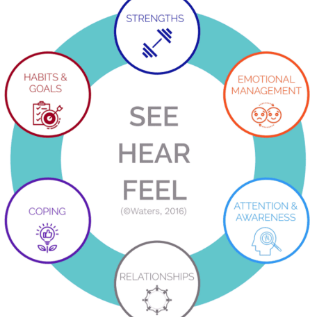
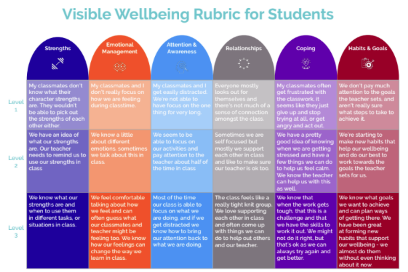
We are learning about how to make wellbeing more visible at Ashburton Primary. There are 6 pathways that contribute to our wellbeing. These include Strengths, Emotional Management, Attention & Awareness, Relationships, Coping and Habits & Goals.
Diversity & Inclusion
The importance of diversity and inclusion in the classroom is for all students feeling a sense of belonging. That feeling of connectedness can create better mental health and learning outcomes. Teaching for diversity refers to acknowledging a range of differences in the classroom. Teaching for inclusion signifies embracing difference, continually working to understand our students' unique backgrounds, perspectives and needs, making them feel safe and celebrated, as well as making the appropriate modifications and adjustments to cater for them.
APS Reconciliation Action Plan
The Victorian Government, through the Department of Education and Training, has worked with the Victorian Koorie community to develop Marrung. Marrung sets out a 10 year vision and identifies the significant actions for its achievement. The Reconciliation Action Plan promotes the department's vision for a reconciled Australia where Aboriginal and Torres Strait Islander peoples, cultures and heritages are valued and accepted as a foundation for unity, equality, and enduring positive change.
To help carry out this vision and plan, we have formed a Koorie Education Staff Team as well as a Koorie student group who form our Koorie Engagement Group (KEG). We also work in partnership with the local Koorie community including our Koorie Education Coordinator (KEC) and our Koorie Engagement Support Officer (KESO) who provide guidance to enhance our cultural inclusion practices, and to support the engagement, attendance and wellbeing of Koorie learners. For further information, see our APS RAP
Community Partnerships at Ashburton Primary School
At Ashburton Primary School, we value the strong partnerships we have built with community organisations that help us support the mental health, wellbeing and engagement of our students.
Through these partnerships, our students and families benefit from a connected network of care and opportunity that extends beyond the classroom.
Some of our key partnerships include:
Kids Hope Mentor Program – providing one-on-one mentoring that builds confidence, resilience and a sense of belonging.

- Foodbank Breakfast Club – ensuring students start the day nourished, focused and ready to learn.
- Boroondara Youth Services – delivering wellbeing initiatives and programs that empower young people to make positive choices.
- Craig Community Centre- offering schools and students several programs, most notably a Homework Club for Years 3-8 that provides a quiet, supportive space with volunteer tutors for academic help. The centre also has The Edge Community Fund, offering practical assistance and resources to families in need, supporting equity and inclusion, such as the My Very Own Library initiative and Student Scholarships.
Together, these partnerships strengthen our school community and help every child feel supported, connected and ready to thrive.